
Why Should Your Next Corporate Event or Family Celebration Feature Private Dining at La Piazza Courtyard?
Understanding the Transformative Power of Intimate Dining Experiences
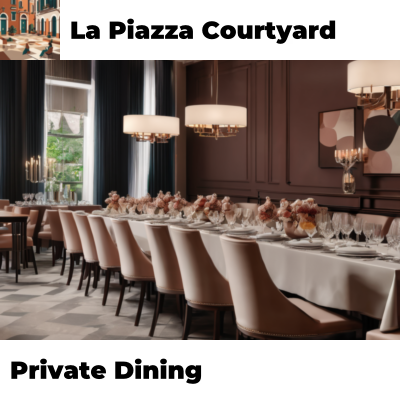
Private dining represents far more than merely renting a segregated space within a restaurant. It constitutes a comprehensive reimagining of how groups—whether professional teams navigating complex projects or extended families celebrating milestones—interact during meals. When individuals gather in thoughtfully curated private environments, the dynamics shift fundamentally. Conversations deepen. Relationships strengthen. The ambient noise dissipates, replaced by genuine connection.
La Piazza Courtyard recognizes this intrinsic human need for exclusivity combined with culinary excellence. The establishment understands that contemporary dining transcends the simple transaction of consuming food. Modern diners increasingly demand experiences that reflect their values, accommodate their specific preferences, and create lasting memories. They seek settings where ambient music doesn't drown conversation, where waitstaff anticipate needs without interrupting intimate moments, and where the cuisine itself tells a story worth savoring.
The Psychological Benefits of Controlled Dining Environments
Research across hospitality and behavioral psychology reveals compelling truths about private dining spaces. When groups occupy designated private areas, participants demonstrate markedly increased engagement levels. Business discussions proceed with enhanced focus. Family members report feeling more genuinely connected to one another. The removal of external distractions—wandering servers from adjacent tables, noise from the bar area, visual interruptions from other diners—creates psychological conditions favorable for meaningful interaction.
Consider the contrast: a typical restaurant setting bombards guests with sensory input. Multiple conversations overlap. Clinking glasses interrupt thoughts mid-sentence. The pressure to maintain volume parity with surrounding noise necessitates elevated speech levels. Over the course of an evening, this accumulated stress diminishes satisfaction ratings and leaves attendees feeling drained rather than rejuvenated.
Alternatively, private dining environments at La Piazza Courtyard eliminate these stressors entirely. The quiet sanctity permits genuine dialogue. Business partners can discuss sensitive matters without concern about eavesdropping. Family members can share personal stories without shouting. The architecture itself becomes a facilitator of human connection rather than an obstacle to overcome.
The Distinctive Advantages of Selecting La Piazza Courtyard for Private Gatherings
Location Strategy and Accessibility Considerations
Situated at 13400 La St, Miami, FL 33121 US, La Piazza Courtyard occupies a position that balances accessibility with privacy. The venue's location provides convenient access for Miami-area residents and professionals while maintaining the atmospheric distinction that private dining demands. Geographic positioning matters considerably when coordinating gatherings—participants traveling excessive distances may arrive fatigued, reducing their capacity for full engagement. Conversely, a venue too centrally located risks the intersection of private parties with high-traffic public spaces.
La Piazza Courtyard's address positions the establishment within Miami's dynamic commercial corridor. Business professionals relocating between downtown offices and waterfront districts encounter minimal travel friction. Families across Miami-Dade County find convenient access. The location avoids suburban isolation while preventing the overwhelming sensory overload of ultra-downtown establishments.
Architectural Design Supporting Intimate Atmosphere
The physical layout of private dining spaces profoundly influences guest experience. Some venues retrofit private areas as uncomfortable afterthoughts—cramped corners, inadequate lighting, furniture obviously salvaged from decades past. La Piazza Courtyard approaches private dining differently. The design philosophy prioritizes comfort without sacrificing elegance. Thoughtful architectural choices create spaces that feel intentional, curated, and genuinely distinguished from the establishment's general dining areas.
Proper spacing between tables permits circulation without creating bottlenecks. Ceiling heights accommodate conversations without creating acoustic peculiarities where whispers carry or booming voices reverberate endlessly. Lighting design implements layers—ambient fixtures providing baseline illumination, accent lighting highlighting architectural features, and controls permitting customization for specific events.
These design elements aren't mere aesthetic considerations. They fundamentally impact how guests perceive value, interpret the occasion's importance, and ultimately evaluate their experience during post-event reflections.
Comprehensive Service Standards That Distinguish Premium Private Dining
Personalization as the Cornerstone of Excellence
Generic service represents the arch-enemy of memorable private dining. When staff treat private events identically to one hundredth reservation that week, the occasion loses distinction. Professional establishments like La Piazza Courtyard recognize that customization demands genuine effort. It requires staff training that extends beyond standard protocols.
Each private dining arrangement begins with consultative conversations. What is the gathering's purpose? Who comprises the guest list? What dietary restrictions exist? Are there cultural considerations influencing menu preferences? Do participants prefer interactive experiences like wine pairings or streamlined efficiency with minimal service interruptions?
Sophisticated venues don't impose predetermined menus upon private events. Rather, they collaborate with hosts to develop culinary experiences reflecting the occasion's unique character. A business dinner celebrating quarterly achievements differs fundamentally from an engagement party. A retirement celebration doesn't require identical programming to a product launch. The best establishments understand these distinctions and adapt accordingly.
Staff Training and Anticipatory Service Models
Superior private dining establishments employ staff trained to operate almost telepathically. Experienced servers notice water glasses reaching the halfway point and replenish proactively. They identify the moment conversation naturally concludes before presenting dessert menus. They recognize when guests desire uninterrupted dialogue and become nearly invisible, positioning themselves to respond instantaneously when needed while otherwise remaining discretely present.
This calibration of service intensity represents genuine expertise. It cannot be rushed or simplified through standardized procedures. Venues maintaining consistent excellence in private dining invest substantially in staff development. Team members receive extensive training in reading social dynamics, understanding various cultural dining customs, and adapting their approach based on each host's preferences.
- Comprehensive training programs teaching anticipatory service techniques
- Ongoing professional development addressing emerging hospitality trends
- Clear communication systems enabling coordinated team responses
- Performance evaluation mechanisms emphasizing guest satisfaction metrics
- Empowerment policies permitting staff to make real-time decisions enhancing experiences
Flexibility in Menu Development and Dietary Accommodations
Modern dining encompasses remarkable complexity regarding nutritional needs, ethical preferences, and cultural requirements. Vegetarianism, veganism, gluten-free necessities, kosher observance, halal compliance, allergic considerations—sophisticated establishments recognize these as fundamental planning requirements rather than special requests creating burden.
La Piazza Courtyard approaches menu customization as opportunity rather than obstacle. The culinary team possesses expertise enabling them to develop compelling dishes meeting virtually any dietary specification. A vegetarian guest shouldn't receive a hastily conceived plate distinctly inferior to omnivorous counterparts' selections. Individuals with gluten sensitivity deserve options showcasing identical creativity and culinary sophistication as standard offerings.
The ability to accommodate diverse dietary needs while maintaining menu cohesion and culinary excellence distinguishes mediocre venues from truly exceptional ones. It requires:
- Detailed advance consultation documenting every participant's requirements
- Kitchen staff possessing recipe modification expertise
- Sourcing capabilities enabling specialty ingredient procurement
- Plating standards ensuring visual presentation consistency regardless of dietary specifications
- Communication protocols preventing cross-contamination in shared kitchen spaces
Strategic Applications of Private Dining for Business Objectives
Corporate Functions and Professional Development Initiatives
Business applications of private dining extend far beyond stereotypical executive dinners. Forward-thinking companies increasingly recognize private dining as instrumental to organizational goals spanning employee recognition, client relationship development, board-level strategic planning, and team cohesion building.
Executive retreats benefit substantially from private dining configurations. When leadership teams gather to address transformational decisions, the setting's character influences deliberation quality. Open restaurant environments introduce artificial constraints—time pressure from table turnover, acoustic challenges requiring raised voices, visual distractions fragmenting focus. Conversely, private dining spaces permit extended discussions without feeling rushed. Strategy sessions extend across multiple courses naturally, creating organic pacing permitting thorough exploration of complex topics.
Client entertainment represents another dimension where private dining delivers measurable business value. Prospective clients forming initial impressions of organizational culture assess countless signals—from staff professionalism to cuisine quality to environmental aesthetics. A private dining experience demonstrates respect for the client's time and importance while showcasing the hosting organization's sophistication and attention to detail. These intangible factors often influence business development outcomes more substantially than formal presentation content.
Team-Building Through Culinary Experiences
Corporate cultures increasingly recognize that meaningful team cohesion requires shared experiences transcending typical office environments. Private dining venues facilitate these experiences through coordinated culinary events. Wine pairing experiences educate participants while creating natural conversation opportunities. Chef's table presentations demystify culinary processes, building appreciation for specialized expertise. Interactive cooking demonstrations transform meals into participatory experiences rather than passive consumption.
These applications serve multiple organizational objectives simultaneously:
- Employee recognition—celebrations demonstrating genuine appreciation for contributions
- Cross-departmental connection—informal settings facilitating relationships across organizational silos
- Client relationship deepening—personalized entertainment distinguishing preferred partners
- Recruitment marketing—positive experiences influencing candidate perceptions during interview processes
- **
Organizational culture reinforcement**—activities reflecting and reinforcing company values
The informal environment of private dining permits genuine human connection across hierarchical boundaries. Junior employees interact with executives without the artificial formality of conference rooms. Clients engage with sales teams in contexts encouraging authentic dialogue rather than transactional exchange. These psychological shifts translate into strengthened relationships, improved collaboration, and enhanced organizational performance.
Professional Milestone Celebrations and Achievement Recognition
Organizations celebrate pivotal moments—promotions, anniversaries, project completions, retirement transitions. The venue choice communicates organizational values regarding employee significance. A private dining experience at La Piazza Courtyard signals genuine appreciation. It demonstrates willingness to invest resources in recognizing achievement. The exclusivity inherent in private dining elevates the occasion, distinguishing it from routine business gatherings.
Retirement celebrations particularly benefit from private dining configurations. These events mark profound life transitions. Honoring career contributions, sharing memories, and facilitating relationships with colleagues—these elements deserve settings specifically designed for meaningful interaction rather than generic restaurant spaces. Private dining enables organizations to create ceremonial spaces reflecting the occasion's emotional weight.
Family Celebrations and Personal Milestones in Intimate Settings
Wedding-Related Events Beyond Traditional Receptions
While wedding receptions constitute obvious applications, private dining serves numerous wedding-adjacent functions. Rehearsal dinners benefit dramatically from private configurations—smaller guest counts, extended family participation, informal atmospheres facilitating genuine conversation. The rehearsal dinner context permits more relaxed entertainment approaches than formal receptions demand.
Destination weddings incorporating local cuisine represent another compelling application. Couples traveling to Miami for ceremonies frequently desire rehearsal functions and post-wedding brunches featuring local establishments. Private dining spaces at La Piazza Courtyard enable these gatherings while maintaining the intimate character these occasions warrant.
Engagement parties, bridal showers, and bachelor/bachelorette celebrations all benefit from private dining's controlled environments. These events emphasize personal connection and relaxed celebration—qualities that open restaurant settings undermine through ambient noise and visual fragmentation.
Multi-Generational Family Gatherings and Heritage Celebrations
Extended families increasingly span geographic distances. When relatives converge for holiday celebrations, family reunions, or cultural observances, the venue choice impacts gathering quality substantially. Private dining spaces accommodate multi-generational participation comfortably. Elderly relatives experience easier accessibility than crowded general seating areas. Children enjoy environments where slightly elevated noise levels or occasional movement distract fewer diners. The absence of pressure regarding table duration permits families to linger, extending conversations, strengthening bonds.
Cultural heritage celebrations deserve settings honoring their significance. Certain cuisines carry profound cultural meaning. Italian family traditions, Spanish festival observances, or Latin American celebration customs warrant venues understanding their importance. La Piazza Courtyard's cultural awareness and culinary expertise enable appropriate honoring of these traditions.
Birthday Celebrations Across Age Ranges and Life Stages
Birthday gatherings span contexts—childhood celebrations introducing young people to fine dining, milestone birthdays marking life transitions, retirement birthday parties celebrating career conclusions. Each warrants distinct approaches, yet private dining accommodates all effectively.
Milestone birthdays—turning forty, fifty, sixty—represent moments deserving commemoration. Guests travel distances, take time from schedules, and deliberately gather to honor the individual. Private dining reflects the occasion's significance through its exclusivity and personalized attention. The space itself becomes a gift, demonstrating the celebrant's importance through environmental distinction.
Culinary Expertise and Menu Innovation Capabilities
Seasonal Ingredient Integration and Farm-to-Table Philosophy
Contemporary culinary excellence increasingly reflects seasonal awareness and ingredient sourcing consciousness. Menus adapting to seasonal availability offer practical advantages—superior ingredient quality at harvest peak, cost efficiencies reducing expenses, environmental sustainability through reduced transportation requirements. Beyond pragmatics, seasonal menus reflect culinary philosophy honoring natural rhythms and ingredient respect.
Private dining venues incorporating seasonal menu development demonstrate commitment to culinary integrity. Rather than maintaining identical offerings regardless of season, thoughtful establishments evolve menus reflecting available ingredients at their peak. Spring menus emphasize asparagus, peas, and tender greens. Summer preparations showcase tomatoes, stone fruits, and fresh herbs at their zenith. Autumn brings root vegetables, mushrooms, and game preparations. Winter menus incorporate preserved preparations, root storage vegetables, and rich braises.
This approach demands kitchen expertise—staff must understand ingredient characteristics, recognize optimal harvest moments, and possess technical skill enabling preparation excellence regardless of ingredient changes. The ability to adapt while maintaining quality consistency distinguishes genuinely skilled culinary operations from mediocre venues simply following recipes.
Custom Menu Development Process and Collaborative Planning
Exceptional private dining experiences emerge from genuine collaboration between hosts and culinary teams. The process begins with detailed consultations exploring:
- Guest count and dietary diversity
- Occasion formality level and atmosphere preferences
- Budget parameters and value expectations
- Timeline for menu finalization
- Cultural considerations or traditional elements
- Preferred cuisine style or specific culinary preferences
- Interactive elements versus streamlined service approaches
From these consultations, culinary professionals develop custom menus reflecting the specific event's character rather than applying standardized templates. A milestone birthday celebration might emphasize the celebrant's favorite cuisines or dishes carrying personal significance. A corporate retreat addressing organizational challenges could incorporate thematic elements through creative menu descriptions. A cultural celebration might feature traditional preparations honoring heritage while incorporating contemporary techniques.
The sophistication of this process cannot be overstated. It requires culinary professionals possessing not merely technical cooking skills but genuine understanding of celebration psychology, cultural sensitivity, and creative problem-solving capabilities.
Wine Pairing Programs and Beverage Coordination
Beverage programming represents often-underestimated dimensions of private dining excellence. Wine pairings elevate meals from satisfactory to memorable through complementary flavor development. Thoughtful beverage selection demonstrates attention to detail and respect for the occasion's importance.
Sophisticated establishments maintain wine programs reflecting diverse preferences and price points. International varietals, domestic selections, boutique producers, and classic established labels should all feature in comprehensive programs. The ability to recommend pairings addressing both culinary and budget considerations distinguishes knowledgeable beverage professionals from staff merely pouring wine without understanding complementary relationships.
For private events, beverage programming opportunities include:
- Pre-dinner cocktail experiences featuring signature drinks or classic preparations
- Wine pairing selections accompanying each course with educational components
- Craft beer and spirits programs reflecting regional or artisanal production
- Non-alcoholic beverage options providing sophisticated alternatives
- Digestif selections concluding meals with appropriate final flavors
- Coffee and tea service offering premium selections and specialty preparations
Professional venues develop beverage programs through genuine expertise rather than merely applying standardized pairings. This requires training, industry knowledge, and genuine passion for the subject matter.
Logistical Coordination and Technical Capabilities Supporting Seamless Events
Audio-Visual Integration for Presentations and Entertainment
Contemporary private events increasingly incorporate audio-visual elements—presentations, photo slideshows, live entertainment coordination, or ambient background programming. Venues prepared for these technical requirements provide infrastructure enabling seamless integration rather than improvised solutions generating operational friction.
Professional private dining spaces feature:
- High-quality projector systems with screen deployment capabilities
- Integrated audio systems permitting music programming and microphone connectivity
- Lighting controls enabling atmosphere customization
- Technology connectivity supporting device integration
- Technical support personnel facilitating smooth execution
These capabilities enable private events to incorporate multimedia elements enhancing celebration character. Anniversary celebrations might feature photo slideshows chronicling relationship journeys. Award ceremonies could incorporate presentation technology highlighting recipient achievements. Corporate functions might integrate brand elements through strategic visual programming.
Space Configuration Flexibility and Setup Customization
Different events demand distinct spatial arrangements. Cocktail-style receptions emphasize standing and mingling, requiring open floor space with strategically positioned high-top tables. Formal dinners demand seated arrangements with specific sightlines and acoustics. Board meetings require conference-style configurations with visibility and technology access. Workshops might necessitate classroom setups with presenter visibility and participant interaction opportunities.
Venue flexibility—the capacity to reconfigure spaces addressing event-specific requirements—represents genuine operational sophistication. It demands staff training, modular furniture systems, and genuine commitment to customization rather than forcing events into predetermined layouts.
Timeline Management and Coordinated Service Execution
Complex private events involve numerous coordinated elements—guest arrival staggering, coat check management, cocktail service, course presentations, entertainment timing, dessert service, coffee service, and guest departure facilitation. Seamless execution requires choreography rival orchestral performances.
Experienced venues establish timeline frameworks with flexibility for natural variation while maintaining coherent pacing. Staff understand that rigid adherence to predetermined schedules undermines authentic experience, yet complete absence of structure creates chaos. The balance between planning and adaptability separates excellence from mediocrity.
Environmental Ambiance Creation Through Thoughtful Design and Decor
Lighting Design and Atmospheric Control
Lighting profoundly influences psychological perception and emotional experience. Harsh overhead lighting creates institutional atmospheres undermining celebration. Inadequate lighting forces uncomfortable straining and creates unflattering facial illumination.